
About our site
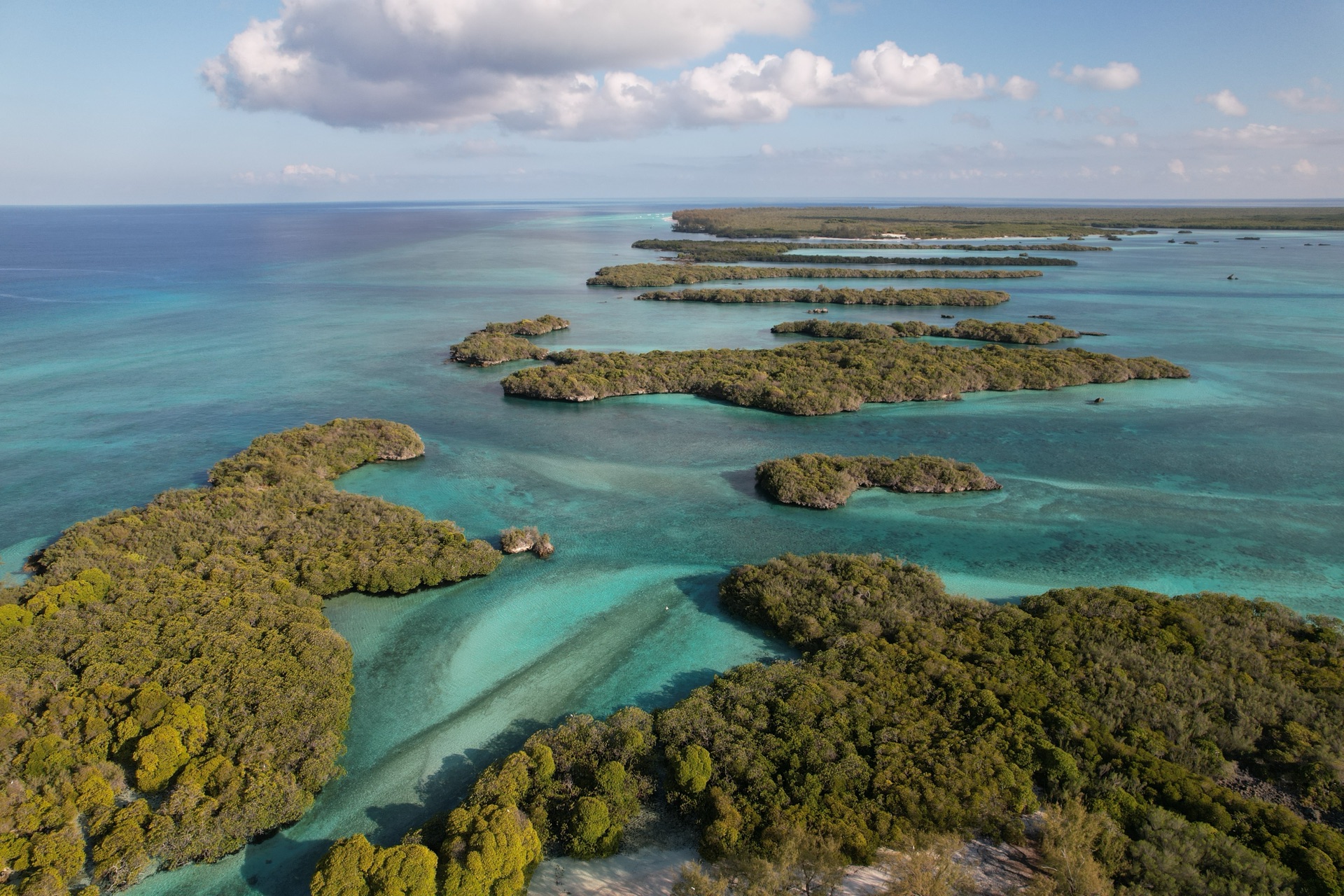
Aldabra Atoll is the second-largest in the world and the biggest of the Seychelles Islands. The atoll lies more than 1000 km southwest of Mahé in the Western Indian Ocean. It consists of 46 islands representing 155 km² of land. Its geographical remoteness and high level of endemism maintain it as a prehistoric relic, as it remains relatively untouched by humans.
Inscribed in 1982 as a UNESCO World Heritage Site, Aldabra has long been recognised as a pristine sanctuary for rare species, both marine and terrestrial. It is home to the largest breeding populations of Red-footed Booby in the Indian Ocean, and the only known breeding habitat for the remaining populations of Dugong in Seychelles, as well as a migratory corridor for breeding Humpback Whales.
Due to its ecological and national significance, extensive research effort has been invested to establish baselines of the inhabiting species, with emphasis placed on maintaining biodiversity through successful eradications and, more recently, focusing on understudied species and ecosystems. Despite decades of research, Aldabra’s genetic richness, particularly of native and endemic marine species, is yet to be explored.
What we plan to achieve
Through the second eDNA Expedition, we aim to broaden our understanding of marine species presence and distribution at Aldabra, providing invaluable data for better management and conservation of the Atoll.
Following the success of the first eDNA expedition in 2024, which revealed three new species of elasmobranchs previously unrecorded around the atoll, we seek to further enrich our marine biodiversity database. To achieve this, we will collect samples across various habitats, including coral reefs, seagrass meadows, and mangrove forests, which are characteristic of Aldabra’s diverse ecosystem.
As one of the largest atolls in the world, Aldabra possesses a variety of habitats that support a rich array of marine life. By sampling across different seasons, we expect to capture a more comprehensive picture of the atoll’s marine biodiversity, including species that may be present only during specific times of the year, such as migrating cetaceans.
Moreover, with a large-scale rat and cat eradication planned for the near future, eDNA monitoring will strengthen our baseline data, enabling us to assess the ecosystem-wide effects of invasive mammal removal over the long term. By establishing a robust pre-eradication baseline, we will be able to track changes in the ecosystem and make informed conservation decisions.
Ultimately, our participation in this phase of the eDNA expedition will yield valuable data that will inform scientific investigations and conservation efforts at Aldabra Atoll, contributing to the effective management and preservation of this unique ecosystem.