
About our site
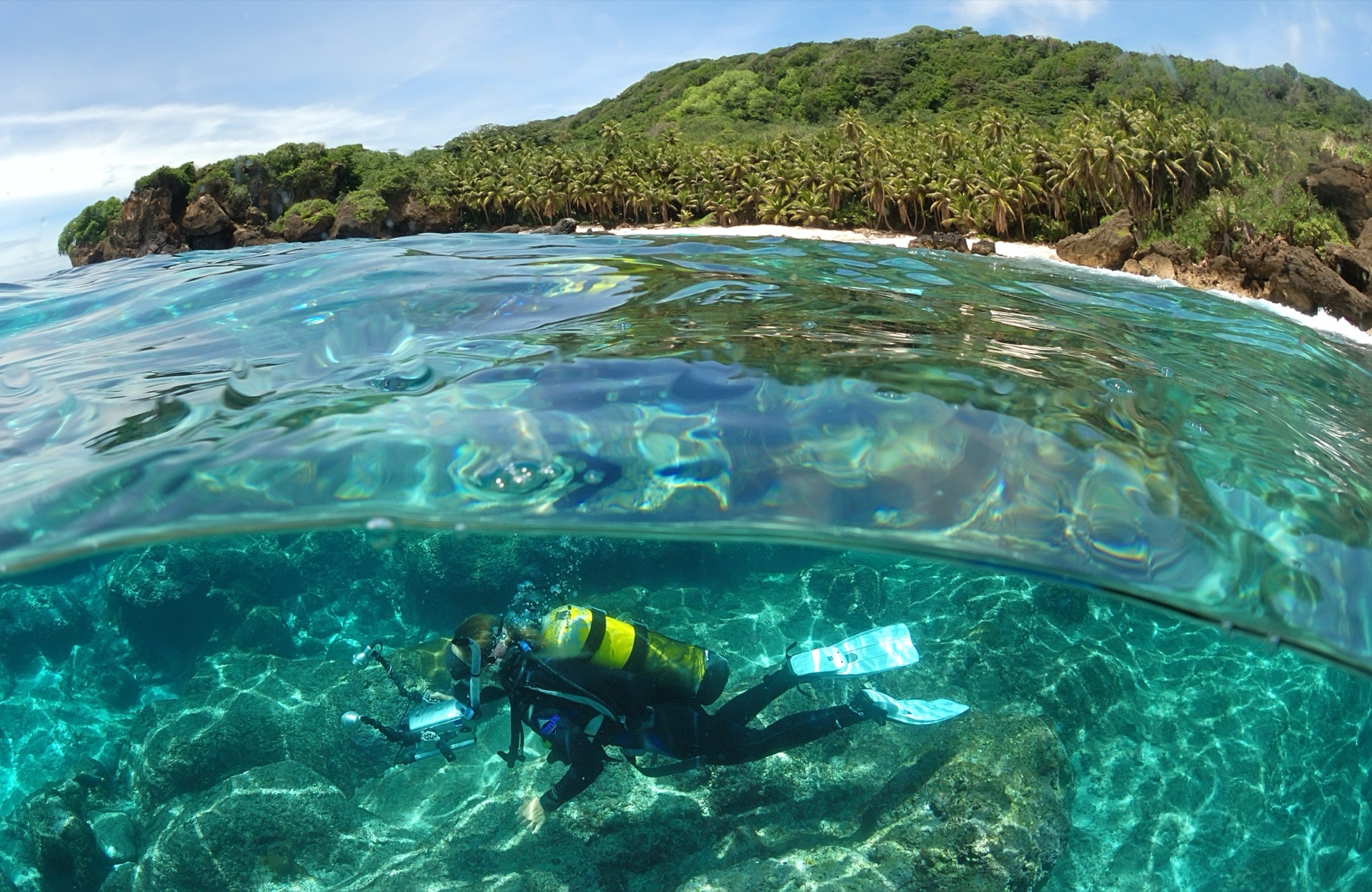
Christmas Island lies in the eastern Indian Ocean, a remote Australian territory renowned for its dramatic cliffs, clear waters, and extraordinary marine biodiversity. A seamount surrounded by deep ocean and fringing coral reefs, the island supports a unique mix of species, including reef and pelagic fishes, sharks, turtles, and seasonal visitors such as whale sharks. Its isolation has fostered high levels of endemism.
Positioned at the juncture of major ocean currents, it is widely acknowledged as a marine hybridisation hotspot, making it globally significant for conservation. The surrounding marine park protects a vast seascape ranging from shallow reefs to deep ocean habitats, yet much of its biodiversity remains understudied due to the challenges of distance and access. Parks Australia manages 277,016 km2 of marine park waters, with a strong focus on preserving ecological values, supporting sustainable use, and engaging the local community.
What we plan to achieve
Through eDNA Expeditions, we aim to establish a robust, repeatable approach to understanding biodiversity across the marine environments of Christmas Island, addressing key knowledge gaps. By sampling across a range of habitats, from fringing coral reefs to deeper slope and offshore waters, we will build biodiversity baselines that capture the region’s marine biodiversity, including cryptic, rare, and difficult-to-survey species.
This will allow us to better understand how species are distributed across habitats and whether biodiversity differs between management zones within the marine park. Over time, repeated sampling will enable us to detect changes in community composition and assess how these relate to environmental pressures.
A key objective is to strengthen early detection of marine invasive species, providing a sensitive surveillance tool that can identify new incursions before they become established — critical for a remote island ecosystem where rapid response is essential but logistically challenging. This work directly supports local management priorities to build ecological baselines, improve monitoring efficiency, and inform adaptive, evidence-based decision-making. It also creates opportunities to involve the local community in meaningful scientific research, fostering stewardship and strengthening connections between people and the marine park.