
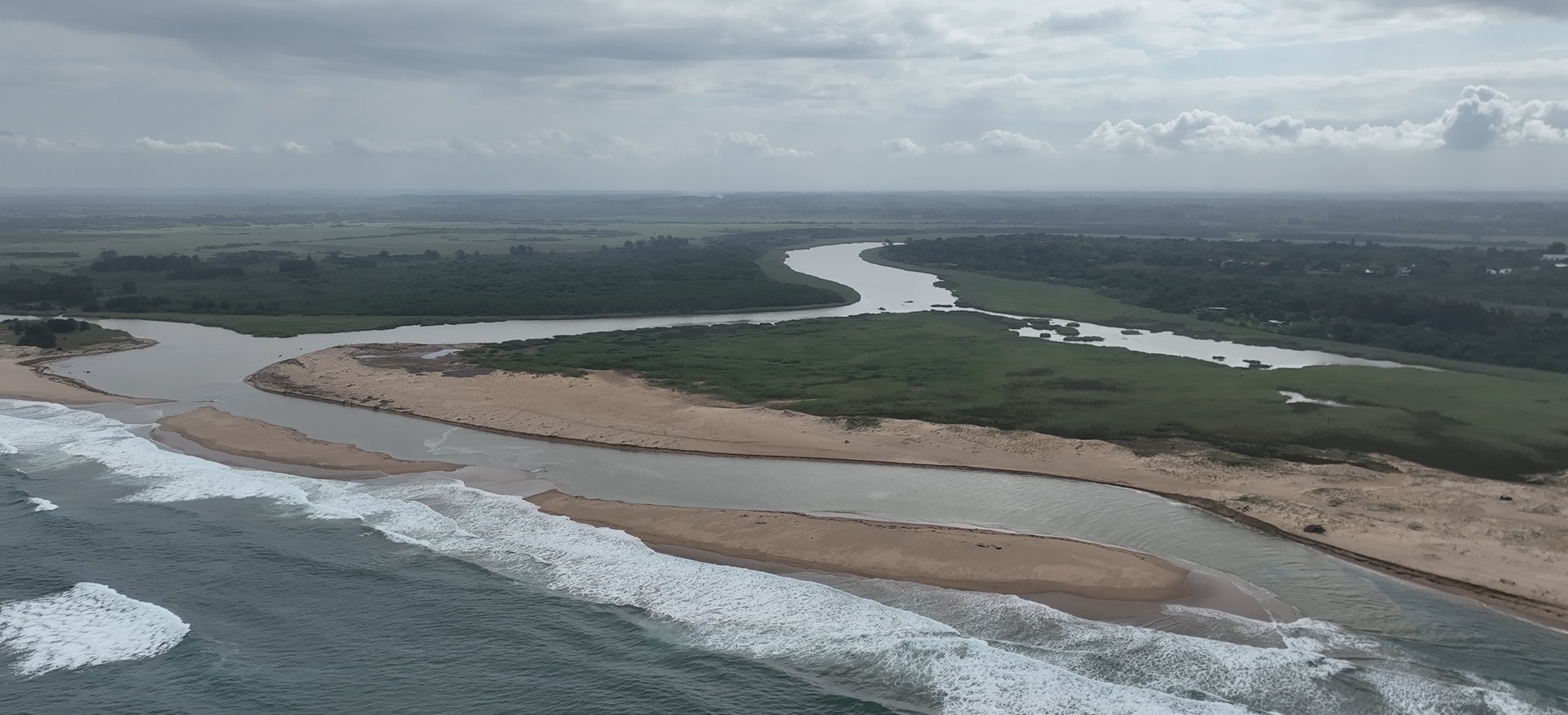
About our site
iSimangaliso Wetland Park is a UNESCO World Heritage Site located on the north-eastern coast of KwaZulu-Natal, South Africa. The Park protects an exceptional mosaic of ecosystems, including the St Lucia Estuary, Kosi Bay lake system, coastal forests, beaches, wetlands, freshwater lakes and marine protected areas. These connected landscapes and seascapes support high biodiversity, important nursery habitats, migratory species, turtles, fish, birds and culturally significant coastal communities.
The Park is managed to protect its Outstanding Universal Value while supporting research, monitoring, restoration, education and sustainable community participation. Ongoing conservation work includes estuarine and marine monitoring, ecosystem restoration, species protection, water quality monitoring, and stakeholder engagement to strengthen long-term biodiversity management.
What we plan to achieve
Through eDNA Expeditions, iSimangaliso aims to establish a three-year citizen science biodiversity monitoring programme from 2026 to 2028 across four priority localities: St Lucia, Kosi Bay, Sodwana Bay and Bhanga Nek. Sampling will be undertaken quarterly, beginning with a launch event in August 2026 at St Lucia, where all sampling kits will be used to train participants and collect the first baseline samples.
The programme will help detect biodiversity patterns across estuarine, freshwater, coastal and marine environments, while also strengthening local participation in conservation science. The results will support management questions linked to ecosystem condition, seasonal biodiversity change, species occurrence, connectivity between systems, and long-term monitoring needs for World Heritage, Ramsar and protected area reporting.
The project will also build local capacity by involving communities, youth, schools and conservation partners in field-based biodiversity monitoring.