
About our site
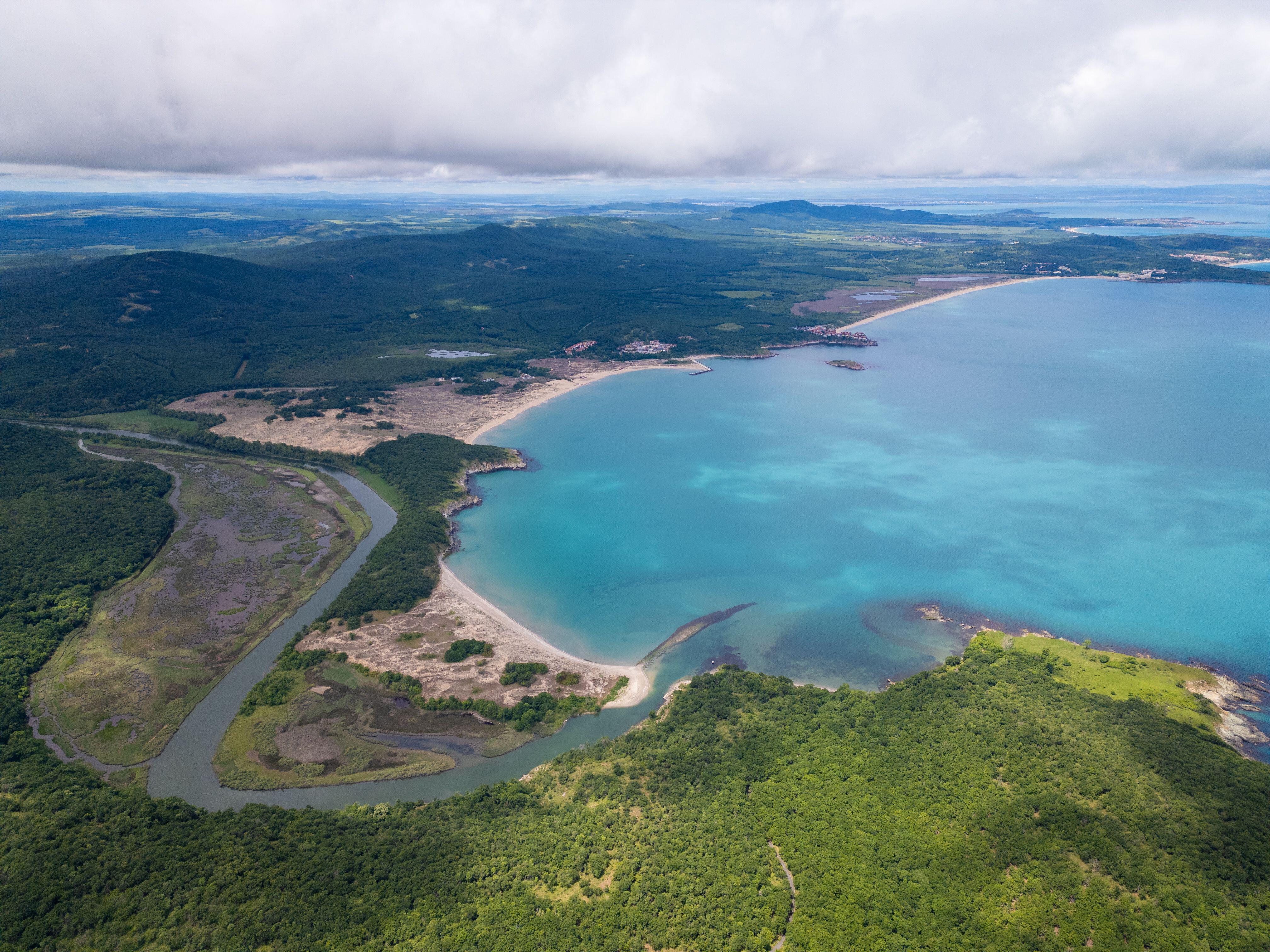
Ropotamo is one of the largest marine protected areas in the Bulgarian Black Sea – part of the country’s Natura 2000 ecological network. The site hosts very diverse coastal habitats and communities: rocky reefs with brown macroalgal forests and black mussels, soft sediments, seagrass meadows, and is home to many rare and vulnerable marine species – from invertebrates to fish, marine mammals and birds.
The coastal human activities are relatively few, because the terrestrial part of the site includes a strict nature reserve along the Ropotamo river. In the summer, the beaches and marine areas attract many tourists, and both commercial and recreational fishing are common.
The Laboratory of Marine Ecology of the Institute of Biodiversity and Ecosystem Research, Bulgarian Academy of Sciences (IBER-BAS) conducts regular water quality monitoring at Ropotamo. With its clean water and well preserved marine habitats and biodiversity, the site offers a glimpse of the Black Sea in its most natural, wild state.
What we plan to achieve
We have good baseline knowledge on macroalgal, seagrass and soft-bottom invertebrate communities in the area based on previous surveys and monitoring. We want to assess their current diversity, especially in the context of the ongoing global biodiversity and climate crises. Fish diversity and how they use coastal habitats in Ropotamo in particular have never been studied in detail, although the macroalgae and seagrasses are presumed to be a nursery for many commercial species.
Recently, more and more Mediterranean fish and invertebrate species have begun to colonize the Black Sea, and have become a common sight on coastal reefs, but this process has also not been well studied along the Bulgarian coast. Regular eDNA surveys will help advance all these topics, bring more taxonomic detail to our biodiversity studies, enrich our knowledge of coastal ecology, and potentially strengthen the arguments for strict protection of this MPA to meet the goals of the EU Biodiversity Strategy 2030.
The involvement of local communities in the surveys could also go a long way towards overcoming current resistance to this idea.