
Protocols, commitment, and curiosity: how a class of 10-year-olds conducted a sampling event for eDNA Expeditions
2 July 2026
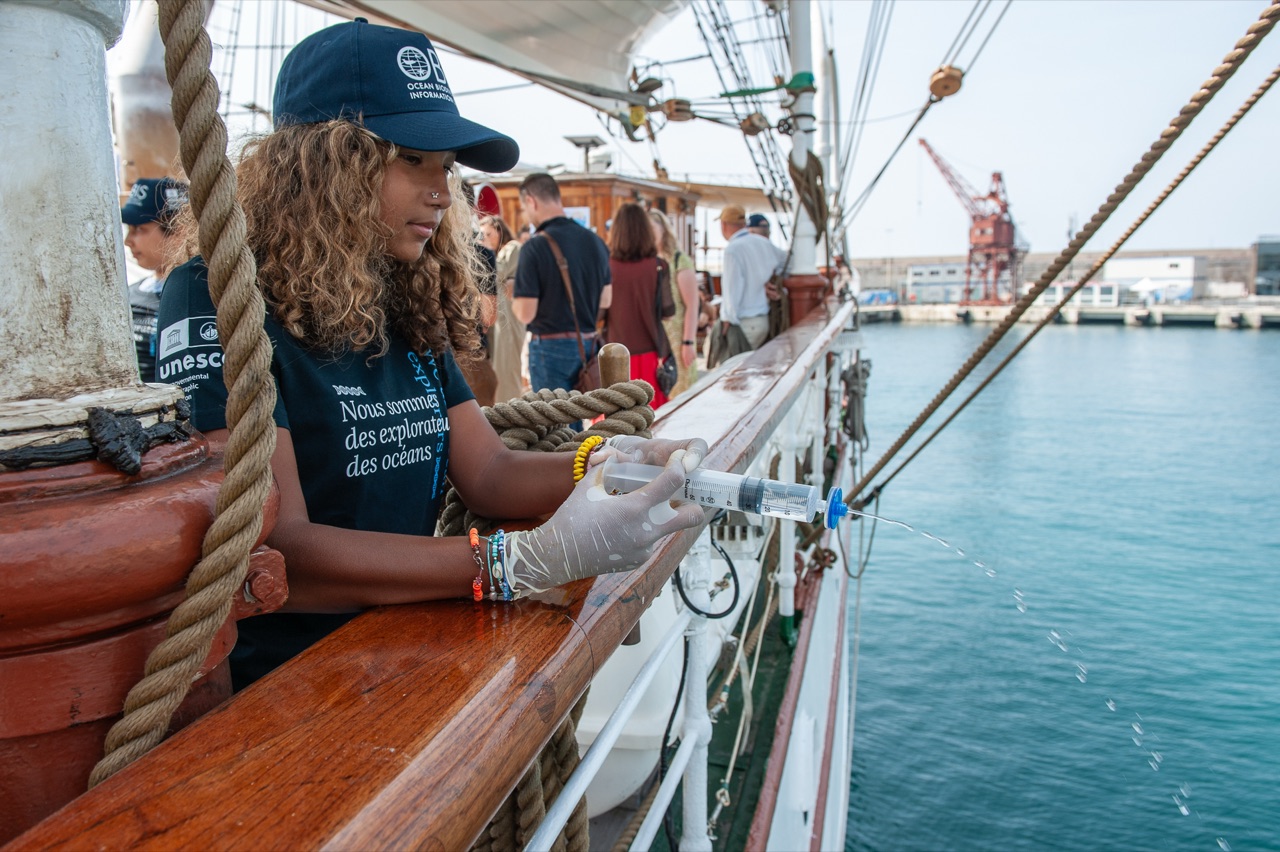
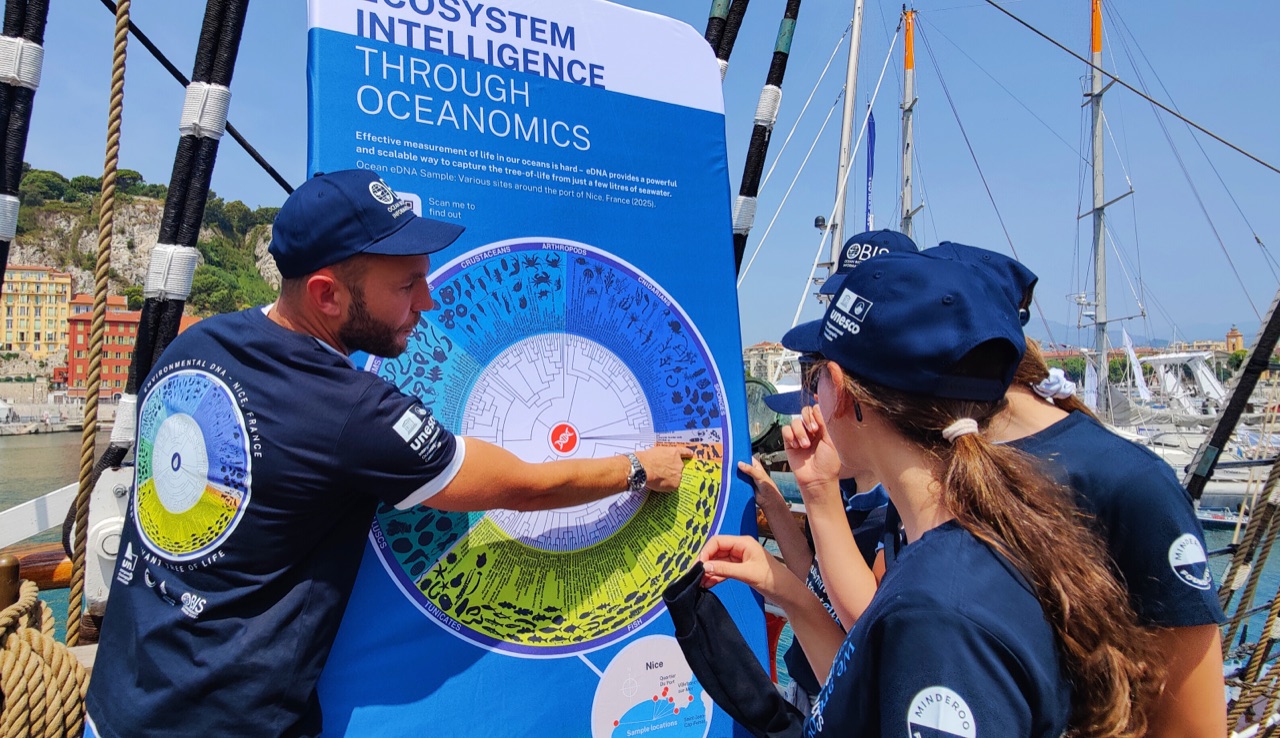
The very first sampling event of eDNA Expeditions 2026–2028 took place in June 2025, at the port of Nice, France, during the third United Nations Ocean Conference. Organized to celebrate the project’s kick-off, it involved an entire class of 10-year-old students and their teacher. The students were in charge of carrying out the sampling, under the supervision of environmental DNA experts from the Intergovernmental Oceanographic Commission (IOC) of UNESCO’s Ocean Biodiversity Information System. A year later, we sat down with Ludovic Perrochia, the teacher involved, to reflect on that very special day and discuss how to explain cutting-edge technologies for observing marine biodiversity using environmental genomics to young learners.
Ludovic, could you introduce yourself and tell us what makes your class a little unusual?
I am Ludovic Perrochia, a teacher of life and earth sciences at a lower-secondary school, Collège Catherine Ségurane, in Nice. Last year, I launched a project-based class called an “educational marine area”, which involves studying a local stretch of coastline and discovering how the whole ecosystem works, which marine organisms are living there, and why. Our area is the whole port of Nice, just a few hundred meters from our school. Throughout the year, the students focus on this specific area and study it.
The concept of educational area was launched in France by the French Office for Biodiversity a few years ago. We do not expect the students to become managers of the area, but we offer them new ways to learn by doing, at a local level, close to them. They make discoveries on the ground, and not only through case studies in the classroom. They go on location, make their own observations, ask questions, and draw their own conclusions or imagine solutions to environmental issues.
How did your class and you end up taking part in the eDNA Expeditions sampling operation that took place in June 2025 during the UN Ocean Conference?
To set up an educational marine area, you need a scientific partner to support you. Our partner is the Centre de Découverte Mer et Montagne, which is located at the port of Nice. I worked with our contact there, who had been approached by OBIS. Our contact told me about a potential environmental sampling operation involving kids, and voilà!
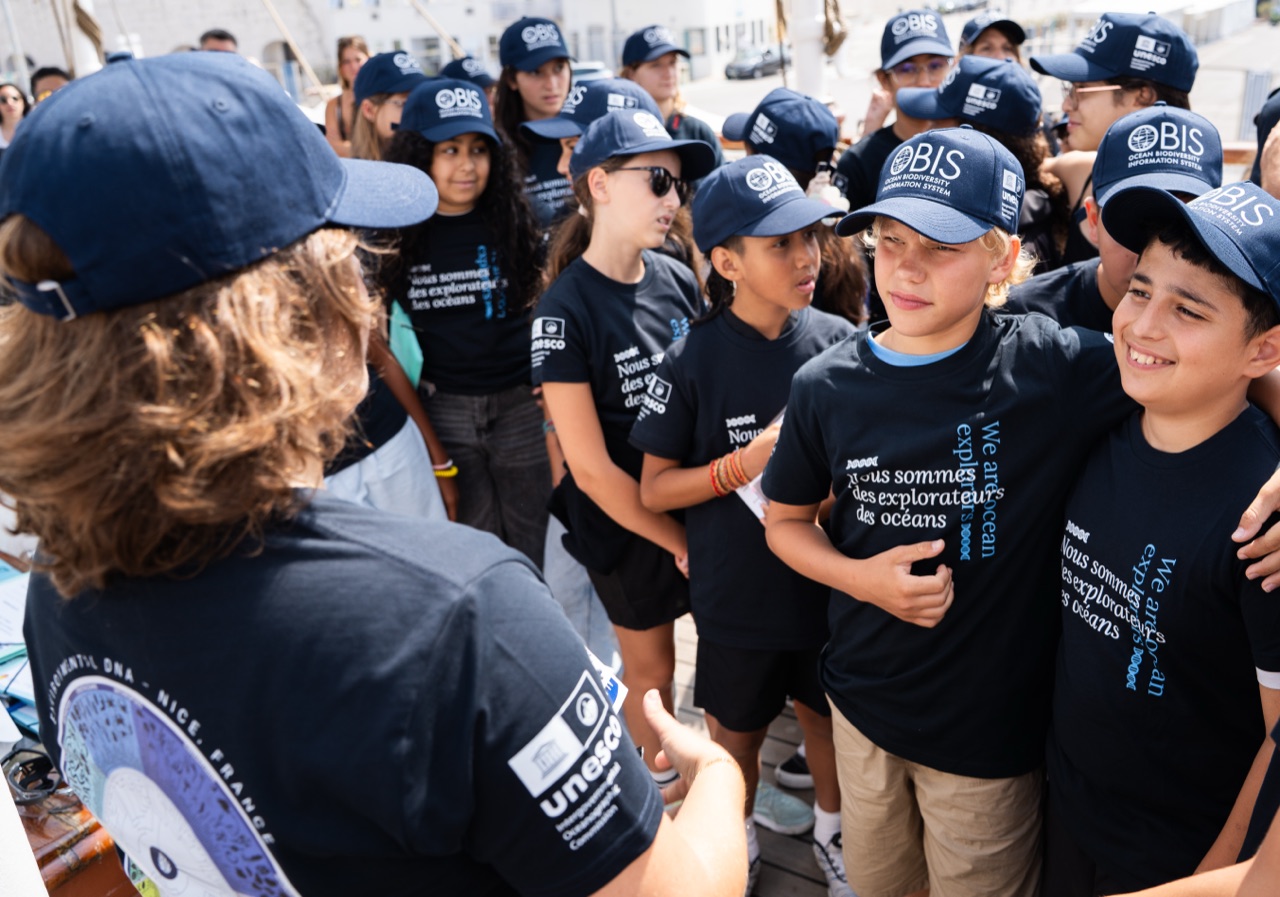
The alignment was perfect! I imagine that you had to prepare your class for something as complex as an environmental DNA sampling event. How did you explain the protocols, the contamination risks, and the particular vocabulary?
It was indeed a little unusual when the project was presented to me, because my students are around 10 or 11 years old, and it was a little daunting to think we were starting almost from scratch. I have an academic research background; I hold a doctorate, so scientific protocols did not intimidate me. Nor did popularising science, because I am used to it. This was the perfect opportunity to discuss high-level research with my students. And the sampling fitted well with what we were doing, because our project for the year was to discover the biodiversity of the port. We had discovered it visually, by going out and making observations, and the environmental DNA part would reveal what we didn’t see.
The difficulty was more in explaining the concept of DNA to students who are still quite young and who do not necessarily know what a cell is. So I prepared sessions to explain the notion of DNA in a very simplified form. In the end, it went quite well: I used the barcode you find on everyday life products as an analogy. Looking up a barcode to find a product is like looking for DNA to find living organisms that you would not see directly. In class, using worksheets and activities, we worked out what the protocol would be, going through each step: what we would need to do, how we recover the DNA when we cannot see it, how we make sure the sample would be valid, and what to do to avoid contamination.
What challenges did you face explaining the concept of biodiversity observations using environmental DNA?
At first, the students found it a little hard to understand what we would be able to do with this information. It remained quite abstract: when you tell them we are going to take seawater to capture something we cannot see, and that we are going to receive a list of species from that, they find it hard to accept. I had to explain that a living organism leaves traces when it passes through a marine area. In the end, they understood, but it was a conceptual challenge I had not anticipated: for them, either the living organism is there, and there is a trace; or it’s not there, and there is no trace. It clicked when I explained that eDNA traces were the same thing as the footprint left by an animal through a muddy path in a forest.
"It clicked when I explained that eDNA traces were the same thing as the footprint left by an animal through a muddy path in a forest."
The second challenge was the sampling day itself. Beforehand, it was a little difficult, even for me, to picture how well we would manage to follow the sampling protocol exactly. I knew that this would require a lot of concentration from my students! In class, we had talked a lot about contamination risk, so the students were a little bit stressed about making mistakes and ruining samples. They knew that if we did things carelessly, we would end up with human DNA everywhere and would not be able to do anything with our samples.
The positive consequence is that as soon as they had the feeling they did something wrong when sampling, they came to tell us, even for very small mistakes. That’s the beginning of scientific rigour! Thanks to that preparation, they understood that it was alright to make mistakes, not to succeed on the first try, but that you had to note everything down and dare to say it. This really gave them a sense of responsibility.
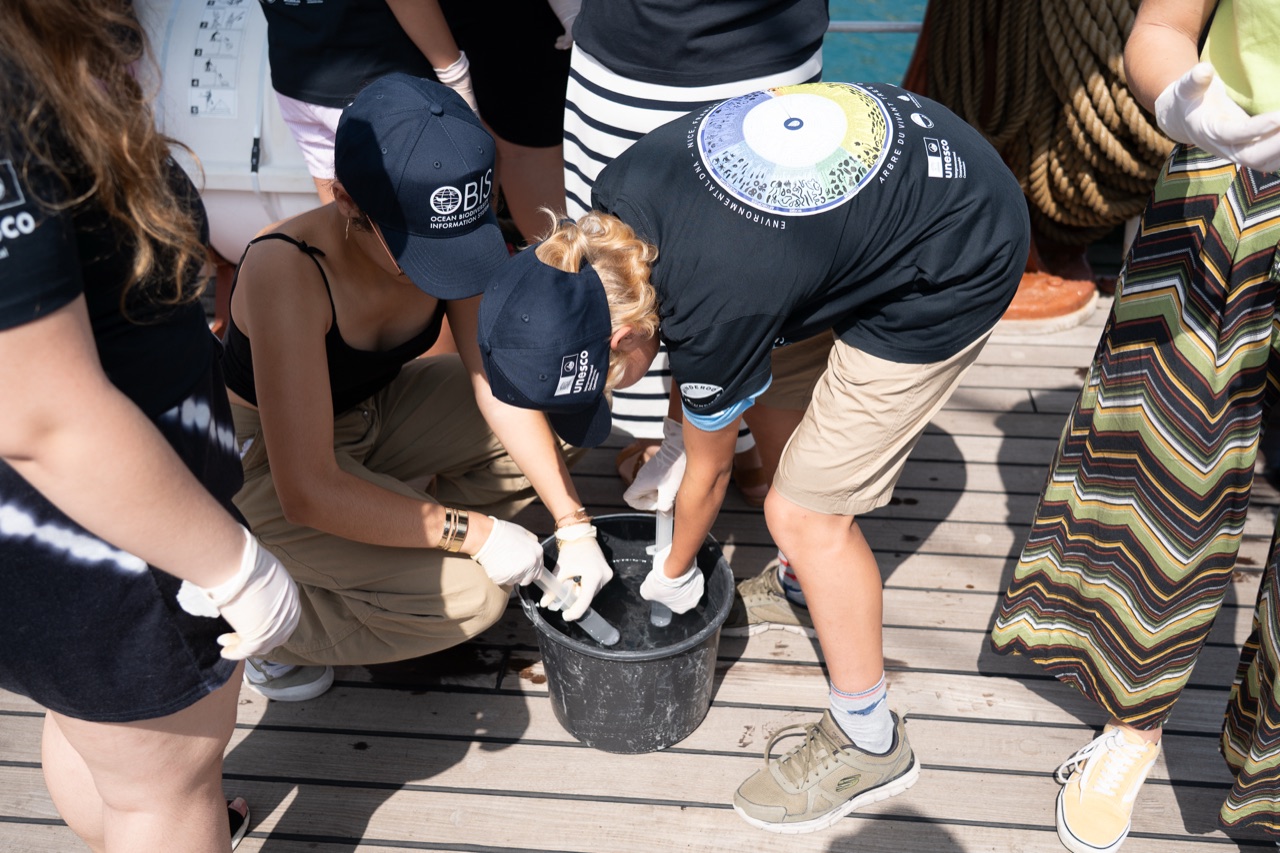
So you think it is not that complicated to explain the concept of biodiversity observations using environmental DNA to 10-year-olds?
When you, as a teacher, see words like “DNA” and “protocols”, you think your students will not understand, and that it will be complicated to explain that. But rapidly, you realise that these are concepts that are not so hard to explain and understand. If you pass beyond the technical words, the concept of environmental DNA can be understood by anyone, at almost any age. It was interesting to work on that because it shows that even high-level research, the most modern research in genomics, is something you can explain to young students.
What did you do with the results of that sampling day?
We got the results after the end of the school year. The students who did the sampling knew we would not have the results before the end of the year. That was useful for them to see that research is not something instantaneous, that it takes time. By the start of the new school year, we had the results, but I had new students: the principle of an educational marine area is to pass the torch to the next class, which takes over the work already done. The class of 2026 got to analyse the results. With our partner, the Centre de Découverte Mer et Montagne, we simplified the table we received because it was too complex to be used directly with the students. We then studied it in class, over several sessions, exploring which species were found most frequently, and which ones cross-checked against our own visual observations. In the end, we used the results to draw a portrait of the port’s entire ecosystem. But we have only used a small part of the sampling results; it has been a goldmine for us, and I think we will keep using it for several more years!
"We have only used a small part of the sampling results; it has been a goldmine for us, and I think we will keep using it for several more years!"
Did you find anything surprising when you cross-checked the visual observations against the sampling results?
Yes, we actually had quite a few surprises! We had a few species that we did not find in the sampling. Certain species were, for us, the stars of the port, because they are very visible, in particular the anemone Anemonia viridis, which I am not sure we found traces of in our samples, even though we clearly know it is there.
And there were a few funny surprises, like finding cow DNA in the port water. That was the little anecdote that made us laugh, and that we gave to the students as a riddle: they had to try to find explanations and form hypotheses about the presence of this cow in the port. Some students quickly worked out that, with the restaurants around the port, it might be cows turned into steaks that had fallen into the water. We also found rat and dog DNA, and quickly understood where that came from. The students expected to find only marine species: finding DNA from non-marine species helped them understand that an ecosystem is not something closed. When you use eDNA to observe marine biodiversity, you are really looking at flows. If you find eDNA traces, these traces might not necessarily come from the place you sampled.
Was there something that your students shared related to the sampling that stayed with you?
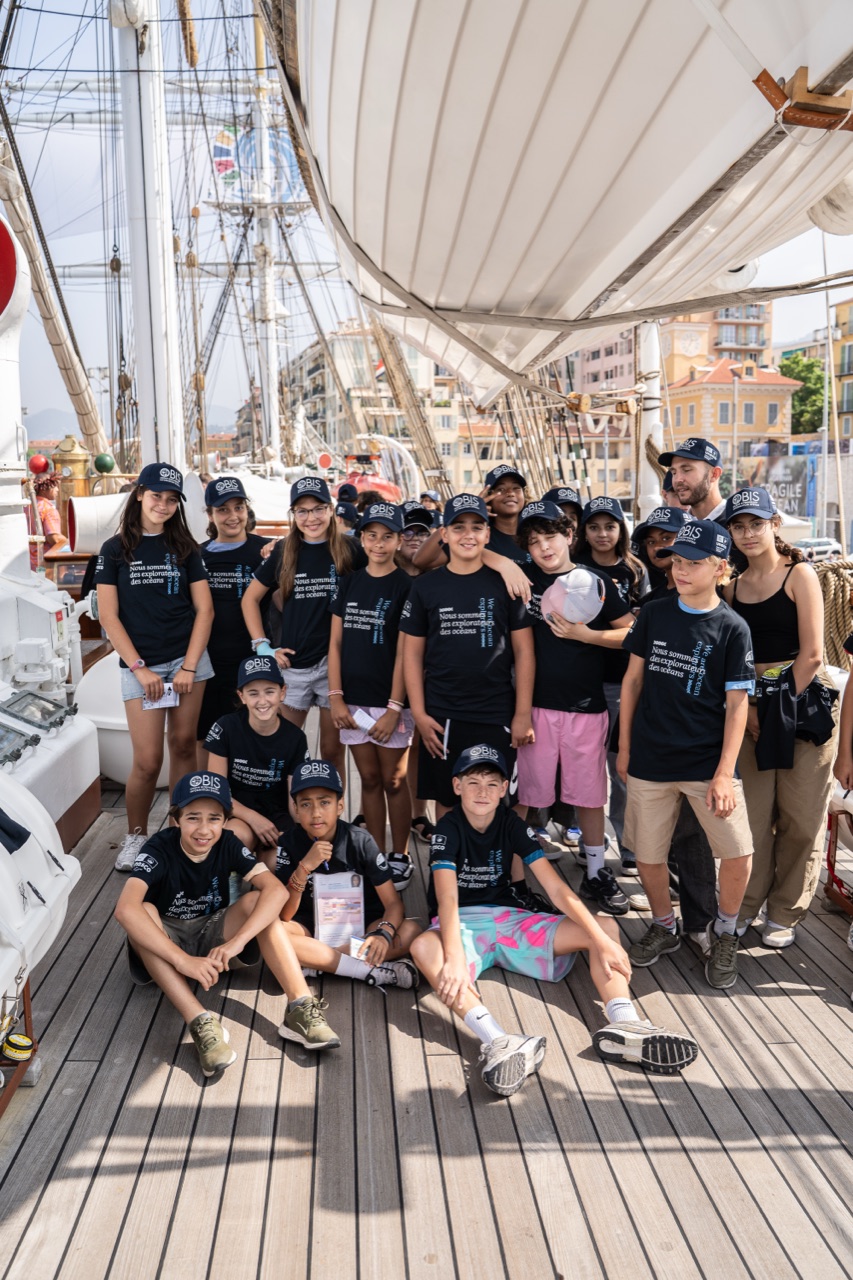
At the end of the sampling day, all the students came to me to say that they had loved doing this, that they had loved being in that atmosphere of team research, in the field. It really made an impression on them; a year later, they still talk about it. They even kept the t-shirts and caps they were given that day, and wear them at school, quite proudly. I think it is an experience that left its mark on them, that gave them a very good first glimpse of what field research can be.
Do you think it sparked any vocations in some of them?
It is a little early to say, at their age. Let us say it may have planted a small seed that will gradually grow. I still have a few students who took part in that sampling day and who continue, in an afterschool oceanographic club I run, to work on questions about the sea, and about plankton in particular. I think that taking part in this eDNA Expeditions sampling was a strong marker for what we are trying to do here at the school: to anchor the sea in our teaching.
Can you tell me a little more about your oceanographic club?
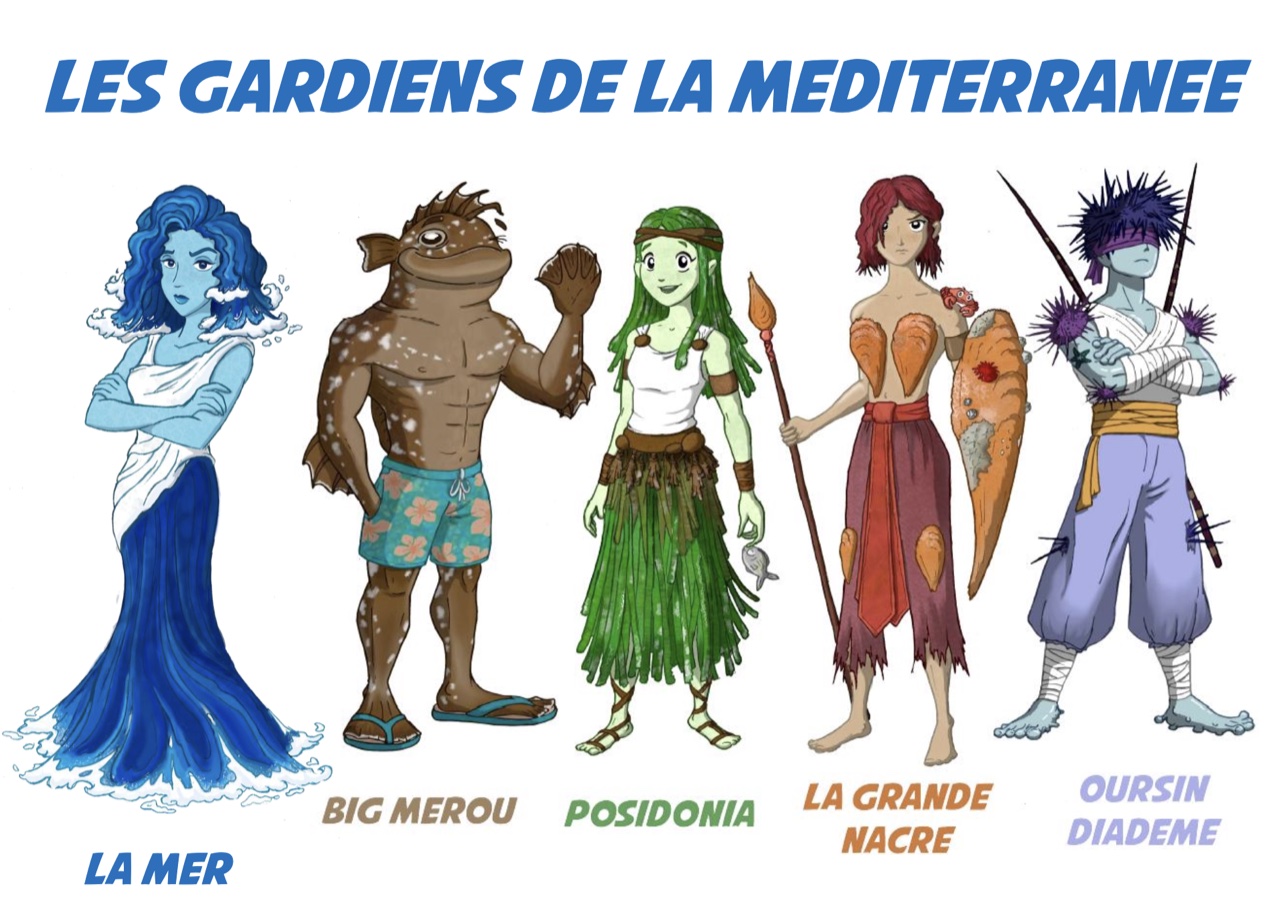
The club is a group of volunteer students recruited each year. The aim is to carry out concrete projects in the Mediterranean, because the sea is right next to us. We combine a science project and an art project. It started three years ago, when the students decided to create a superhero story based on Mediterranean species, a bit like Guardians of the Galaxy, but a Guardians of the Mediterranean Sea version. The students created four characters and a story. This year, we focused on the impact of sunscreen on microplankton. The students cultured brine shrimp and microalgae, following a strict scientific protocol, to study the impact of sunscreen on these organisms. In parallel, we took up drawing classes to observe and draw the plankton, in the naturalist style of the last century. Every year we take part in competitions. Last year, the club took part in UNOC by leading and running workshops. This year, we took part in Monaco’s Océano pour tous competition, and we won the first prize. We have an Instagram account that has quite a lot of content about everything the students have done over the past three years.
If tomorrow we invite your class to another eDNA Expeditions sampling event, would you do it again?
Yes, 100 per cent! My recommendation to other teachers: overcome your initial apprehension and jump in when you have the opportunity. You will not regret it, and your students will love it! Prepare beforehand, take your participation as a serious game that will make complex concepts accessible.
Ludovic, is there anything you would like to add?
Just a huge thank you to eDNA Expeditions. You brought the cherry on the cake: we had worked all year on the sea, and participating in the sampling event opened up a whole field of possibilities. We got access to a constellation of data.
Dive deeper
- Follow the Collège Catherine Ségurane Oceanographic Club on Instagram
- Access Mare Nostrum, le réveil des guardiens, the audiobook recorded by Ludovic Perrochia’s students, featuring the Guardians of the Mediterranean Sea
- Stay informed, join our newsletter (scroll below!)