
A robust and accessible sampling process at the core of eDNA Expeditions
31 July 2026
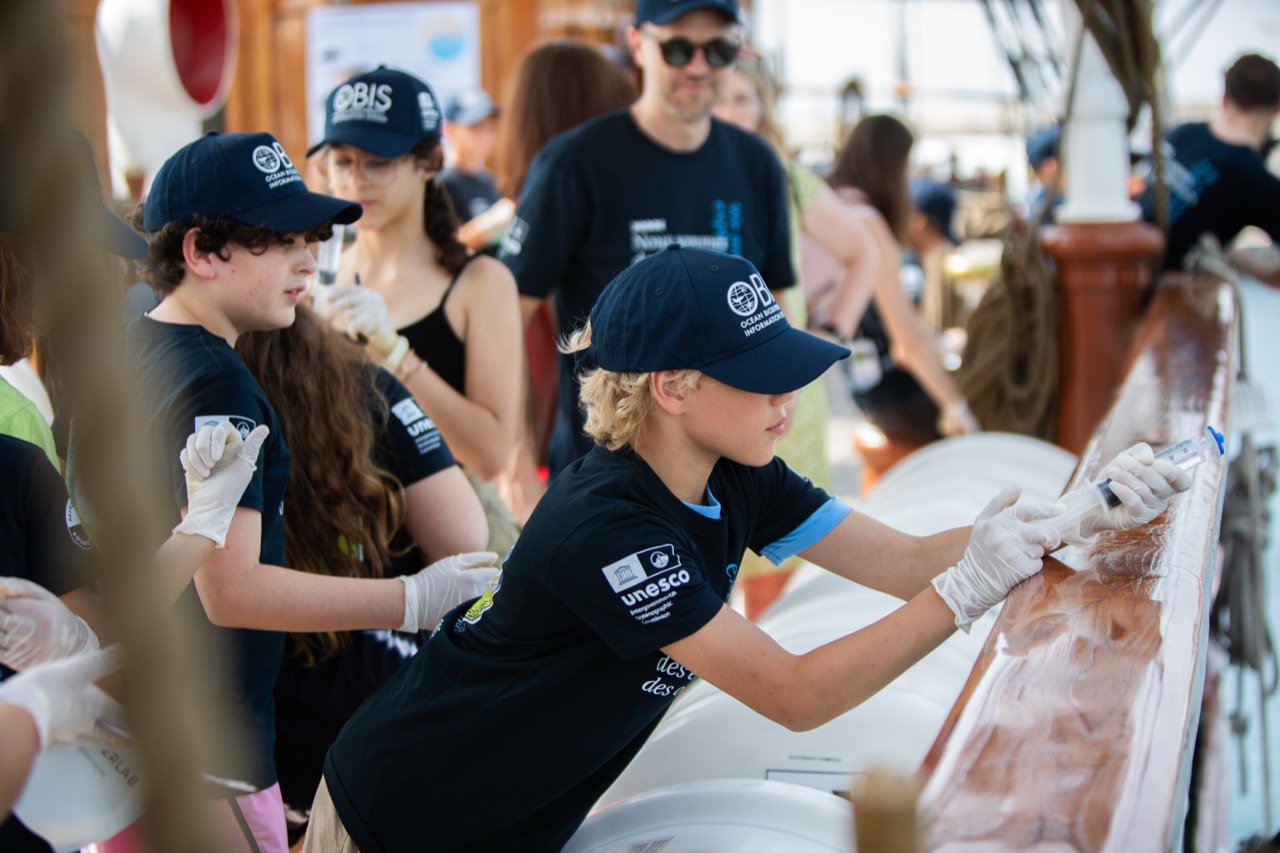
Creating a sampling protocol for DNA-based marine observations that is both inclusive and robust is a delicate alchemy: it has to avoid contamination while making sure enough genetic material is captured to be sequenced. eDNA Expeditions relies on a sampling protocol designed to be followed by citizen scientists, allowing for the consistent collection of environmental DNA across very different settings, from remote coastlines to city harbours, without the need for costly equipment.
Environmental DNA is the genetic material that organisms, dead or alive, leave behind in their environment through things like skin cells, mucus, or waste. In the ocean, this DNA stays mixed in the seawater. “We can capture this material by collecting and filtering seawater, and get a clear picture of which species are present within the surveyed area,” explains Saara Suominen, eDNA Expeditions 2026–2028 Operations Manager. “Just one litre of seawater can reveal traces of fish, marine mammals, invertebrates, algae, plankton, and many other forms of marine life, which makes eDNA a powerful tool for detecting species in the ocean.”
To be accessible to all, the eDNA Expeditions 2026–2028 sampling protocol was broken down into simple steps, made easy to follow through detailed guidelines and training material. “Sampling sits at the very base of the whole information chain of the project,” says Emilie Boulanger, eDNA Expeditions 2026–2028 Scientific Officer. “We designed and implemented this protocol, which minimizes the risk of mistakes, to allow people with no prior scientific experience to fully participate in the project.” After an initial development phase involving the project’s international scientific advisory board, the protocol was tested during a sampling event carried out by a class of 10-year-old students at the third United Nations Ocean Conference, in Nice, in June 2025. Thirteen samples were collected, generating more than 8 million DNA sequence reads and revealing 1,069 taxa, of which 145 were identified to species level.
A protocol and sampling kits designed for the field
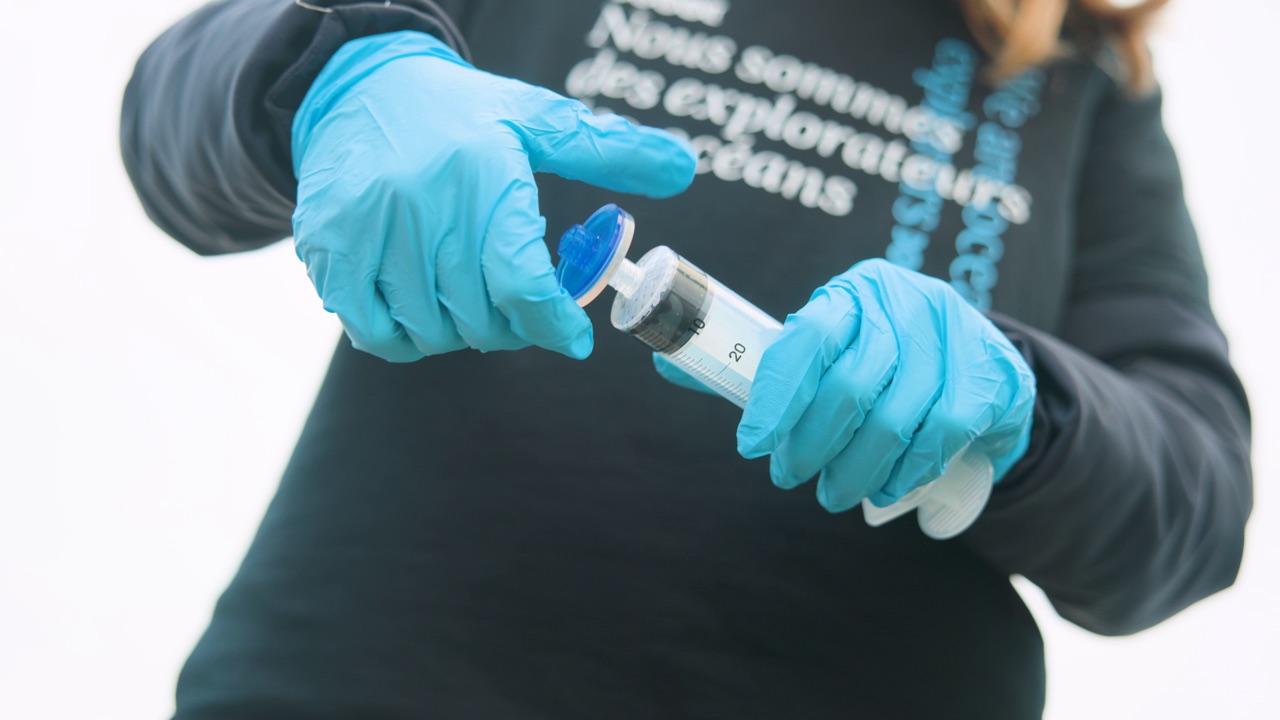
Fully understanding the eDNA Expeditions sampling protocol is crucial for the field teams involved. “We have created a training video and a field sampling guide that contain all the information the teams need to know,” explains Saara Suominen. “Each person involved in a sampling event should go through these materials before heading to the field and understand each step of the process. There are a few key moments in the protocol when teams really have to focus to make sure to avoid contamination, such as when screwing and unscrewing the disc filter onto the sampling syringe, for example.”
"There are a few key moments in the protocol when teams really have to focus to make sure to avoid contamination, such as when screwing and unscrewing the disc filter onto the sampling syringe."
The team has developed a very detailed Field Sampling Guide and a dedicated training video to ensure that everything runs smoothly on the sampling day. “When arriving at a sampling location, it’s easy to get carried away by the excitement of the moment,” says Emilie Boulanger. “You might be on a boat, surrounded by marine animals. Having our Field Sampling Guide at hand helps the teams know what they have to do next to get their sample right!”
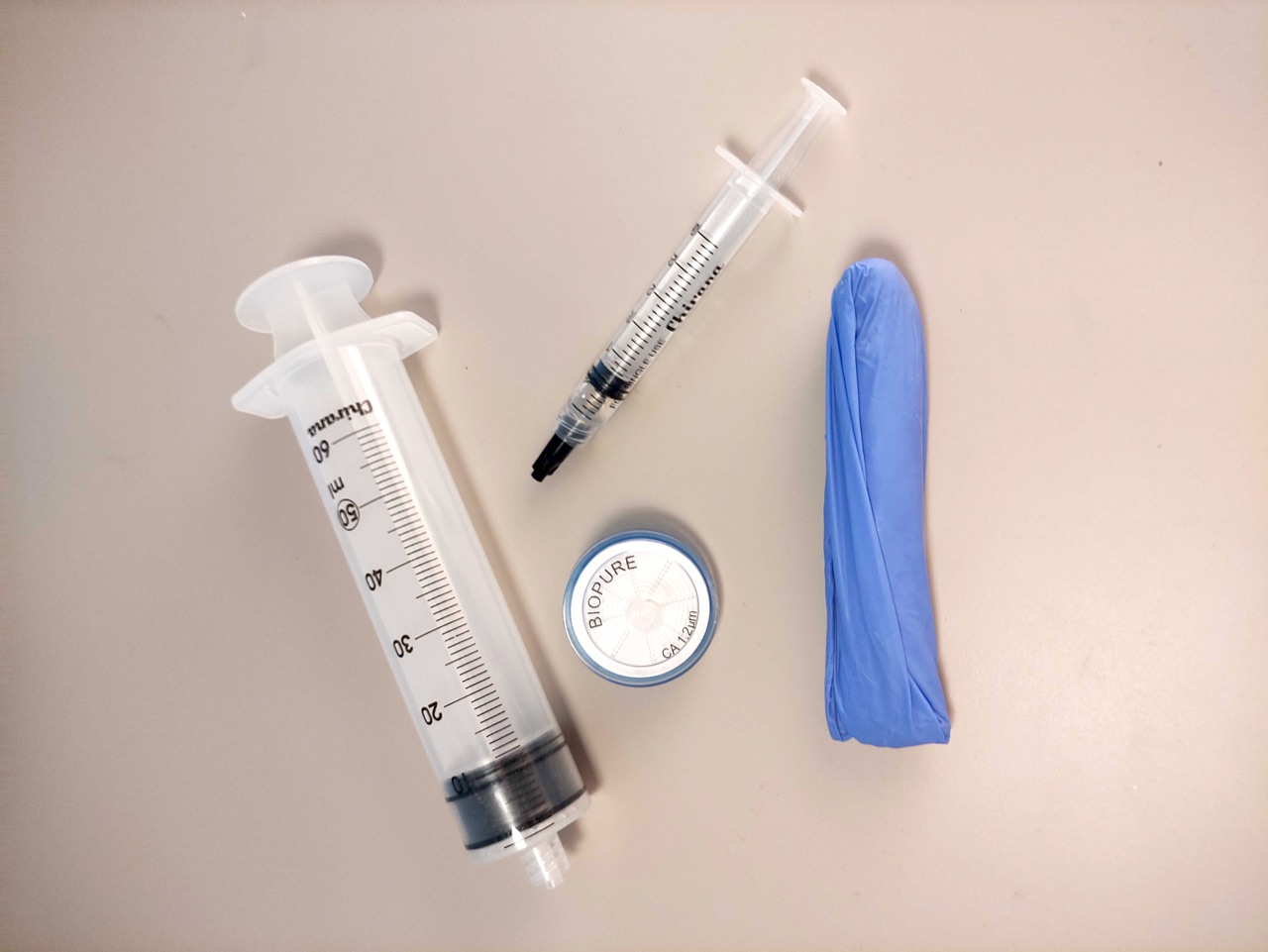
The sampling kits themselves are deliberately simple, so that anyone can use them with minimal training. Made by Wilderlab, they come in a sealed sterile pouch and contain a 60 mL sampling syringe to push water into the disc filter, a 1.2 µm disc filter to catch DNA fragments, a 5 mL preservation syringe to protect the material captured in the filter, and a pair of gloves to avoid contamination. All this material is built to withstand the potentially adverse conditions local teams might encounter at their sampling locations: the components are made to resist shocks and abrasion, and are designed to be manipulated while wearing gloves. Full guidance is also provided on how to protect the samples and the preservation liquid from ultraviolet light and heat.
Avoiding contamination
A full sampling event uses fourteen kits: twelve for filtering a litre of seawater each and capturing DNA fragments, and two for negative controls. The sampling team also carries one backup kit in case of malfunction. The two negative controls are simply samples of clean, bottled drinking water, filtered at the start and at the end of the day. These negative samples allow the sequencing laboratory to detect any potential common contaminants or cross-contamination, so that the actual samples can be analyzed with confidence. The inclusion of these negative samples in the protocol contributes to making the data trustworthy.
Throughout the process, strict steps are taken to avoid contamination. “The measures are simple, but efficient when carefully applied,” says Emilie Boulanger. She explains that contamination can come from the equipment, the team, and even the environment at the sampling location. Sampling bottles are decontaminated before and between samples using a 10 per cent household bleach solution, and should be kept closed between filtrations to limit potential contamination from the air. Team members wear gloves, handle all the kit elements carefully, and avoid touching their face while sampling, even when wearing gloves. Sampling kits are only opened at the sampling location, and only when the team is ready to start sampling. At the sampling location, teams are advised to stay away from obvious contamination sources such as harbours, boat bilge pumps, and fish cleaning stations. “Obviously, the kits are not reusable: one kit captures and stores one sample,” concludes Emilie Boulanger.
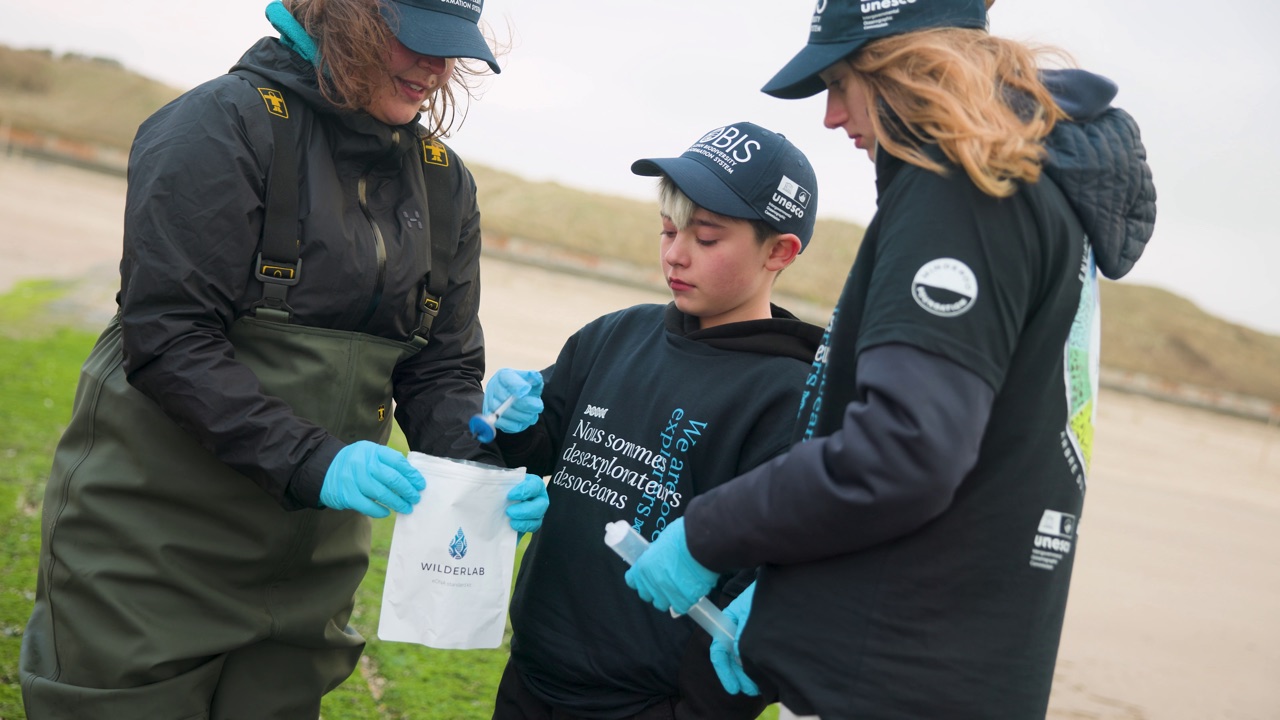
Each of the 25 sites participating in eDNA Expeditions 2026–2028 has its own environmental characteristics, from turbid shallow warm bays to clear cold seas, and its own sampling team, with varying degrees of scientific experience. “The eDNA Expeditions sampling protocol is standardized to allow for comparability,” explains Saara Suominen. “It works in two configurations: manual filtering for citizen science sampling events, and pump filtering, to save time when sampling is conducted with only a few people. The protocol also takes into account the environmental variability for each site. This is why we included a test sampling event.” A first test sampling event takes place at each participating site, so that local sampling teams can evaluate how the protocol and the kits perform in their specific environmental conditions. In the case of sampling in cloudy or sediment-rich water, for example, the disc filter might get clogged before reaching the litre of water indicated in the protocol, requiring the sampling team to note down the exact amount of water filtered. “The total amount of DNA collected in the filter depends more on the amount of organic matter in the environment than on the exact amount of water filtered,” says Saara Suominen.
Built on shared experience and best community practice, the sampling protocol implemented during eDNA Expeditions 2026–2028 aims to empower local actors to be the first link in a long sampling-to-solution chain. “Our protocol allows anyone without prior scientific experience to turn a litre of seawater into knowledge that will help protect their local waters,” concludes Saara Suominen.
"Our protocol allows anyone without prior scientific experience to turn a litre of seawater into knowledge that will help protect their local waters."
Dive deeper
- Read how a class of 10-year-olds carried out the very first eDNA Expeditions sampling event, in Nice, France
- Read the eDNA Expeditions 2026-2028 implementation plan
- Check our Field Sampling Guide and our training video
- Stay informed, join our newsletter (scroll below!)